Navigating Roblox Studio can feel like learning a new language, especially when you are eager to bring your game ideas to life. For the millions of US gamers who regularly dive into creation, understanding essential tools is paramount. This comprehensive guide simplifies how to go to properties on Roblox Studio, a fundamental window for customizing every aspect of your game objects. Whether you are tweaking a part's color, size, or behavior, the Properties window is your go-to hub. We will walk through the steps to locate and effectively utilize this powerful tool, ensuring your development process is smooth and efficient. Learn to master object customization, enhance your gameplay, and build engaging experiences that resonate with a global audience of creators and players. This resource is tailored for busy adult gamers balancing passion with life, offering quick, actionable insights to boost your Roblox development skills without unnecessary jargon or time sinks. Discover the secrets to making your creations truly unique and impactful.
Related games- Guide to Roblox Shirt Templates Create Custom Avatar Gear
- Guide to Bittersweet Roblox Twitter Moments and Community
- Guide to Assassin Sparkle Roblox Master Your Game
- Guide How To Find Best Free PC Games For Busy Gamers
- Guide Finding Best Blue Hoodie Roblox ID Simple
How do I find the Properties window in Roblox Studio?
To find the Properties window in Roblox Studio, simply navigate to the "View" tab at the very top of the Studio interface. Within the "View" ribbon, you will see an icon labeled "Properties." Clicking this icon will make the Properties window appear, typically on the right side of your screen, ready for you to use. This is the first step for any creator looking to customize their game elements.
What is the main purpose of the Properties window?
The main purpose of the Properties window is to display and allow you to modify the attributes of any selected object within your Roblox game. Whether it is a part, a script, a light, or a UI element, this window provides granular control over its appearance, physics, behavior, and other settings. It is crucial for fine-tuning every detail of your game's components.
Why is my Properties window empty or not showing any options?
If your Properties window is empty or not showing any options, it usually means you do not have an object currently selected in your workspace or the Explorer window. To fix this, simply click on any object in your game world or select it from the Explorer hierarchy, and its properties will automatically populate in the window.
Can I change the size and color of a Part using the Properties window?
Yes, absolutely! The Properties window is the primary tool for changing a Part's size and color, among many other visual attributes. After selecting a Part, you can locate the 'Size' property under the 'Part' category to input new dimensions, and the 'Color' property under 'Appearance' to select a new hue. You can also adjust its 'Material', 'Transparency', and more.
Where does the Properties window usually dock in Roblox Studio?
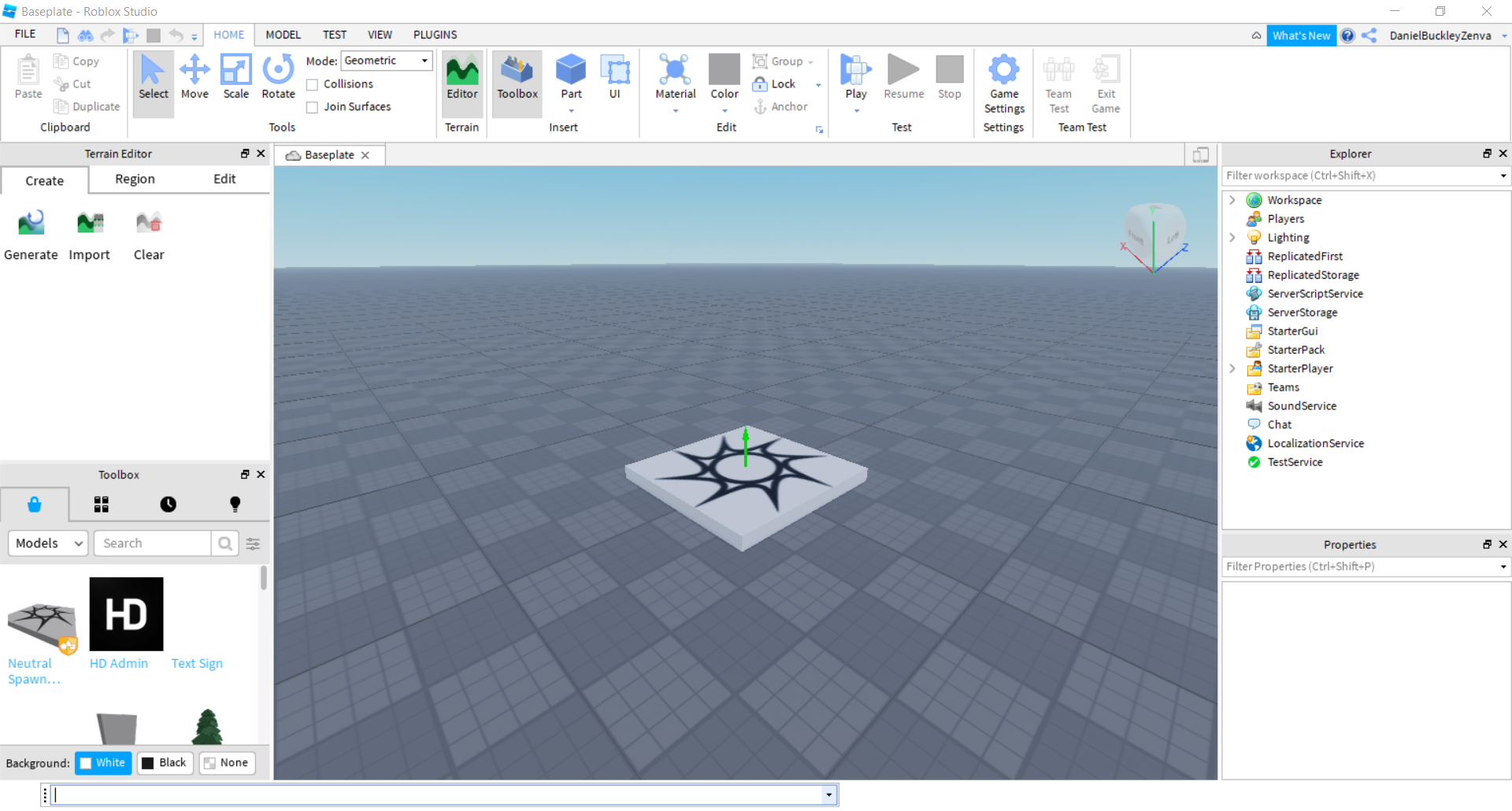
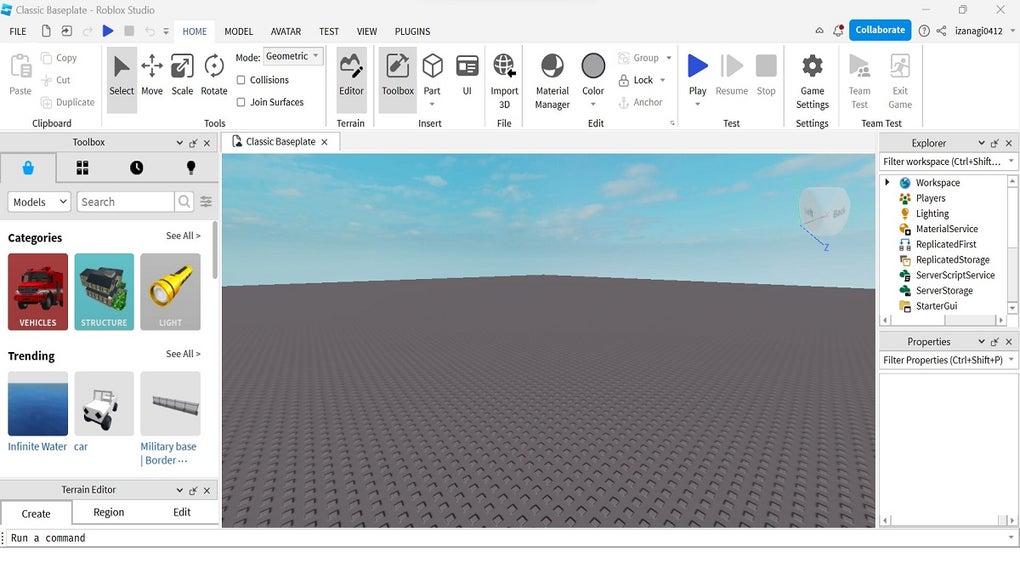
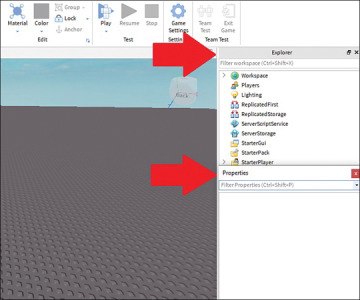
By default, the Properties window often docks itself on the right-hand side of the Roblox Studio interface, typically below or above the Explorer window. However, it can be dragged and docked to any side of the screen, or even left as a floating window, depending on your personal workflow preferences and screen setup.
Is the Properties window only for visual objects like parts?
No, the Properties window is not just for visual objects. It is a universal tool that works for virtually all object types in Roblox Studio. This includes non-visual elements like scripts (to enable/disable them), folders, UI elements (to adjust text, size, position), and even services like the Workspace or Lighting, allowing comprehensive configuration across your entire game.
How can I quickly find a specific property within the window?
To quickly find a specific property, utilize the search bar located at the top of the Properties window. Simply type the name or a keyword related to the property you are looking for (e.g., "Transparency," "Anchored," "Text"), and the list of properties will filter down, making it much faster to locate and modify the desired setting, especially for objects with many attributes.
Ever found yourself staring at a cool new part in Roblox Studio, brimming with ideas, only to realize you have no clue how to change its color, make it transparent, or give it a special material? You are not alone. For many US gamers, particularly the 87% who regularly play and the 60% balancing gaming with a busy life, time is precious. We want to jump in, create, and see results without getting bogged down in endless menus. The Properties window in Roblox Studio is your ultimate control panel for almost everything in your game, from a simple block's appearance to a complex script's behavior. Mastering how to go to properties on Roblox Studio is not just a technical step; it is a gateway to unlocking your creative potential and making your game truly yours. This guide is designed for you, the busy creator who loves to game, build skills, and optimize their experience without the hype. We will show you exactly how to find, understand, and leverage the Properties window, transforming your development workflow into a streamlined, efficient, and fun process. Let us demystify this essential tool so you can spend less time searching and more time building the next big Roblox hit or even just a fun place for your friends to hang out after a long day.
What is the Properties Window in Roblox Studio and Why is it Crucial?
The Properties window in Roblox Studio is a vital interface that displays and allows you to modify the attributes of any selected object in your game. Think of it as the control panel for everything you place in your workspace, whether it is a Part, a Script, a Light, or even your Player character. When you select an object, this window automatically updates to show all its adjustable settings, from its visual appearance like color and transparency, to its physical properties like size and friction, and even advanced scripting parameters. For busy gamers keen on efficient creation, understanding this window is non-negotiable. It is where you fine-tune your assets, ensuring they look and behave exactly as you intend, without needing to delve into complex scripting for every minor change. This efficiency is key for adult gamers who might only have an hour or two a day to dedicate to their passion projects.
How Do I Go To Properties on Roblox Studio for the First Time?
Accessing the Properties window in Roblox Studio is straightforward, even if you are just starting your game development journey. When you first open Roblox Studio, sometimes this window might not be visible by default, or you might have closed it accidentally. Do not worry; retrieving it takes just a few clicks. The most common method involves using the "View" tab located at the very top of your Roblox Studio interface. This tab houses all the essential panels and windows you will need for development. Once found, this window will become your best friend for customizing game elements, a core skill for the 10+ hours a week many US gamers dedicate to their craft.
Step 1: Open Roblox Studio. Launch Roblox Studio and open a new or existing place.
Step 2: Navigate to the 'View' Tab. Look at the top menu bar. You will see several tabs like 'Home', 'Model', 'Test', and 'View'. Click on the 'View' tab.
Step 3: Locate and Click 'Properties'. Within the 'View' tab ribbon, you will find an icon labeled 'Properties'. It often looks like a gear or a list. Click this icon.
Step 4: The Properties Window Appears. The Properties window should now appear, typically docking itself on the right or left side of your screen. If it appears as a floating window, you can drag and dock it to your preferred location for better workflow.
What If My Properties Window Disappears or Is Hidden?
It is a common scenario: you are deep in development, perhaps adjusting your workspace layout, and suddenly the Properties window vanishes. This can be frustrating, especially when you are on a tight schedule. Rest assured, it is usually just hidden or undocked. The process to bring it back is the same as opening it for the first time. Simply go back to the 'View' tab and click the 'Properties' button again. If it is already highlighted, try clicking it off and on. Sometimes, it might have been docked behind another window or minimized. A quick toggle usually resolves the issue, getting you back to building without losing precious minutes.
How Do I Customize Objects Using the Properties Window?
Once you have the Properties window open, customizing objects becomes intuitive. First, select an object in your workspace by clicking on it. For example, insert a 'Part' (cube) from the 'Home' tab. With the part selected, the Properties window will populate with all its editable attributes. You will see categories like 'Appearance', 'Data', 'Part', and 'Behavior', each containing various settings. This is where the magic happens for developers who want to create unique experiences for the growing social gaming trend.
Appearance: Change 'Color' by clicking the colored box, adjust 'Material' (e.g., Plastic, Metal, Neon), and modify 'Transparency' (0 for opaque, 1 for invisible).
Part: Adjust 'Size' by typing new dimensions, set 'Anchored' to true to prevent it from falling, and control 'CanCollide' to determine if players can walk through it.
Data: Assign a 'Name' to your object for easier identification in the Explorer window and scripts. This is vital for organization in larger projects.
Behavior: For specific objects like scripts, you might see options like 'Disabled' which lets you temporarily turn off a script without deleting it.
By experimenting with these properties, you can quickly transform basic shapes into detailed game assets, making your world vibrant and interactive. Many successful Roblox experiences leverage clever property adjustments rather than complex models, proving that smart use of tools beats endless hours of modeling.
Can I Use the Properties Window for Scripts and UI Elements?
Absolutely! The versatility of the Properties window extends far beyond just physical parts. It is indispensable for configuring scripts, user interface (UI) elements, cameras, lights, and virtually every other object in Roblox Studio. When you select a 'Script' in the Explorer, its Properties window will display options like 'Disabled' (to enable/disable it), and potentially custom properties if you have added them. For 'ScreenGuis' or 'TextLabels', you will find settings for 'Text', 'TextColor3', 'Font', 'Size', 'Position', 'BackgroundColor3', and many more, allowing for precise control over your game's user experience. This unified approach to customization across different object types simplifies the learning curve and speeds up development, crucial for gamers balancing work and play.
How Do Experienced Creators Optimize Their Workflow with Properties?
Seasoned Roblox developers, often balancing creation with jobs and families, prioritize efficiency. They often keep the Properties window docked in an easily accessible location, typically on the right side of their screen, directly below or above the Explorer window. This setup allows for quick selection of objects via the Explorer and immediate modification in Properties. They also learn common hotkeys for selecting objects and utilize the 'Filter' search bar within the Properties window to quickly find specific attributes, especially useful for objects with many adjustable settings. Furthermore, understanding which properties can be adjusted via scripting (e.g., Part.Color = Color3.new(1, 0, 0)) versus those best set manually in the Properties window is key to a robust and performant game. This strategic integration of manual tweaks and programmatic control is a hallmark of efficient development, reflecting the "performance optimization" value many adult gamers seek.
What Are Some Common Issues When Using the Properties Window and How to Fix Them?
While generally reliable, you might encounter minor hiccups with the Properties window.
Issue: Properties window is empty.
Fix: This usually means no object is currently selected. Click on an object in your workspace or in the Explorer window to populate its properties.
Issue: Cannot find a specific property.
Fix: Ensure you have the correct object selected. Some properties are unique to certain object types. Also, use the search bar at the top of the Properties window to filter for the property you are looking for.
Issue: Properties are grayed out or uneditable.
Fix: This often happens when a property is controlled by a script, is locked, or is not applicable to the current object in that context. Check if the object is locked (a small padlock icon in the Explorer) or if a script is actively changing that property. Sometimes, selecting the parent object or a different component might reveal editable properties.
Issue: Properties window is too small or too large.
Fix: You can drag the edges of the window to resize it. If it is docked, drag the border between the Properties window and other panels. If it is a floating window, drag its corners.
Troubleshooting these minor issues efficiently means less downtime and more creative flow, a significant benefit for any gamer trying to maximize their limited creative hours.
How Does Mastering Properties Improve Your Roblox Development Skills?
Mastering the Properties window is akin to a gamer mastering their character’s abilities or a pro understanding every nuance of their favorite game’s mechanics. It provides granular control over every aspect of your creations without needing to write extensive code for basic customizations. This foundational skill allows you to:
Rapid Prototype: Quickly adjust visual and physical aspects of objects to test ideas on the fly.
Enhance Visuals: Create stunning environments with varied materials, colors, and lighting effects.
Refine Gameplay: Tweak collision detection, movement properties, and environmental physics to create compelling interactions.
Improve Efficiency: Spend less time debugging code for simple changes and more time on unique game logic.
Boost Creativity: A deeper understanding of available properties can spark new ideas for game mechanics and visual designs.
In a world where mobile gaming dominates (over 50% of gamers play on mobile) and social experiences are paramount, quickly iterating on designs and ensuring a polished look directly impacts player engagement and retention.
Are there any advanced tips for using the Properties window?
For those looking to level up their Studio game, there are a few advanced tricks for the Properties window.
Multi-Selection Editing: You can select multiple objects (by holding Ctrl/Cmd and clicking, or by dragging a selection box) and edit common properties for all of them simultaneously. For instance, change the material of 20 parts at once.
Copying Properties: Right-click on an object, select "Copy Properties," then right-click another object and select "Paste Properties." This is a huge time-saver for consistency.
Exploring Service Properties: Even services like Workspace, ReplicatedStorage, and ServerScriptService have properties you can adjust, often related to game settings, filtering enabled, or streaming. Select these services in the Explorer to see their options.
Custom Properties with Attributes: For even more advanced users, Roblox Studio allows you to create custom "Attributes" on objects, which then appear in the Properties window just like built-in properties. This is powerful for organizing game data and making scripts cleaner.
These techniques help streamline complex projects, a valuable skill for any gamer who enjoys skill-building and optimizing their performance, whether in-game or in-Studio.
Conclusion:
Navigating the powerful tools within Roblox Studio can seem daunting at first, but mastering foundational elements like the Properties window is a game-changer for any aspiring or experienced creator. We have explored not just how to go to properties on Roblox Studio, but why it is the linchpin of object customization, offering unparalleled control over your game's visuals, physics, and behavior. By leveraging this essential panel, you are not just building games; you are crafting experiences, optimizing your workflow, and honing valuable development skills that translate across various creative platforms. Remember, efficiency and precision are key for balancing your passion for gaming with life's other demands. So, dive in, experiment, and make those properties work for you!
What is your biggest gaming challenge when it comes to customizing objects in Roblox Studio? Comment below!
FAQ Section:
What does the "Explorer" window do in conjunction with Properties?
The Explorer window lists all objects currently in your Roblox game hierarchy, acting like a file browser. When you select an object in the Explorer, its specific attributes and settings are then displayed in the Properties window, allowing you to modify them directly. They work hand-in-hand for efficient object management and customization.
Can I open multiple Properties windows at once?
No, Roblox Studio typically only displays one active Properties window. It dynamically updates to show the properties of the currently selected object. If you need to see different properties simultaneously, you would need to quickly switch between object selections or rely on memory.
Why are some properties read-only?
Certain properties are read-only because they are system-generated, dynamically controlled by the game engine, or cannot be manually altered. For example, an object's 'ClassName' is fixed, and its 'Position' might be constantly updated by physics or scripts, making direct manual editing less practical in some contexts.
How can I make my Properties window bigger?
You can resize the Properties window by hovering your mouse over its edges until a double-headed arrow appears, then click and drag to expand or shrink it. If it is docked, drag the splitter bar between the Properties window and any adjacent panels to adjust its size relative to others.
Is there a shortcut to open the Properties window?
While there is no single universal keyboard shortcut for "Properties" as there is for saving (Ctrl+S), the fastest way to access it is usually via the 'View' tab at the top of Roblox Studio. Once visible, it remains accessible until you manually close it. Many developers keep it open and docked permanently.
Can I group properties for easier access?
Roblox Studio automatically groups properties into categories (e.g., Appearance, Data, Part) to make them more manageable. While you cannot create custom groups within the default Properties window, the search bar helps filter and quickly find specific attributes, significantly improving navigation for busy creators.
Locating the Properties window in Roblox Studio; Opening the Properties pane; Understanding object customization options; Adjusting part attributes like color, size, material; Modifying script properties; Accessing advanced object settings; Streamlining game development workflow.
35


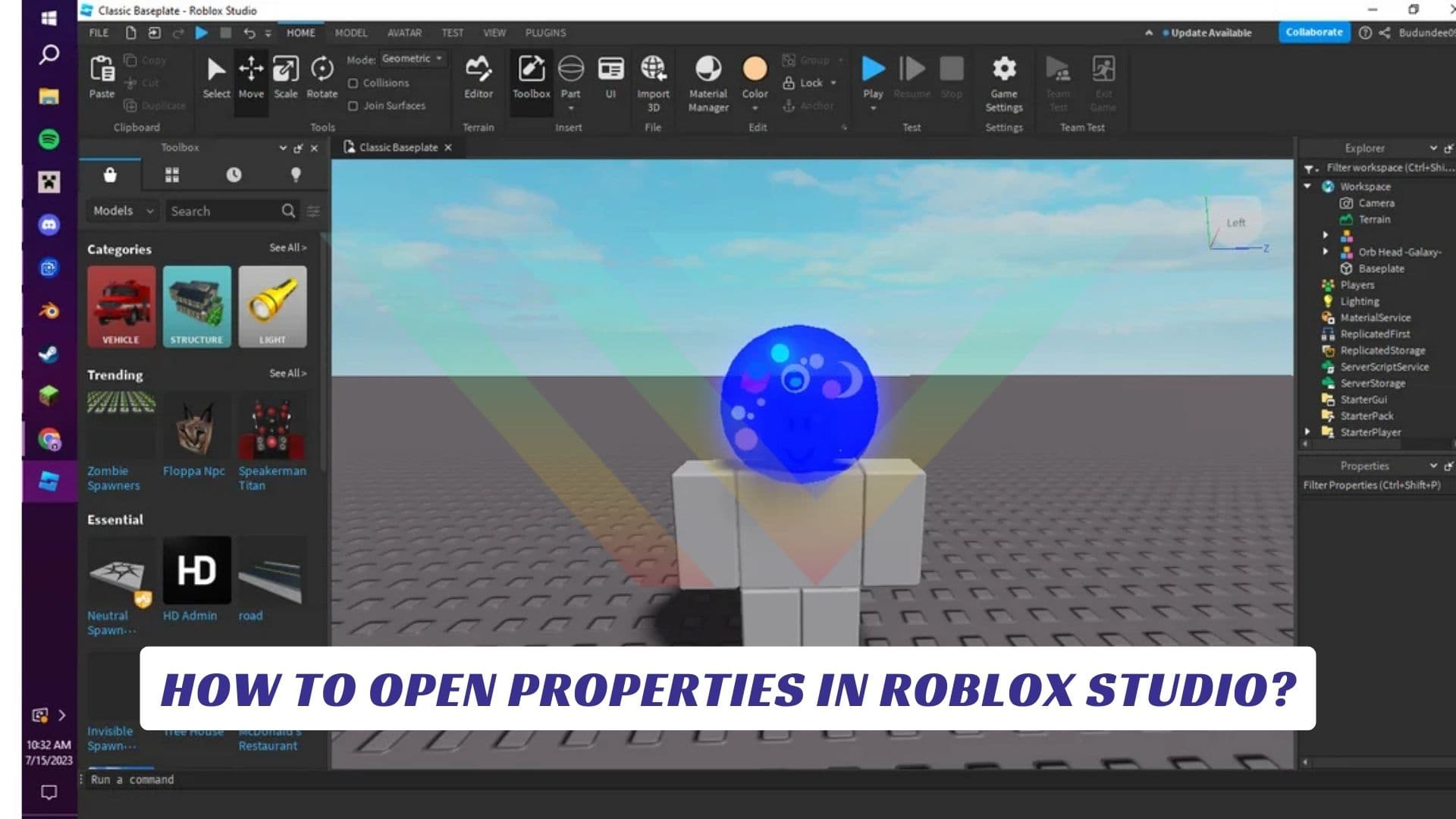
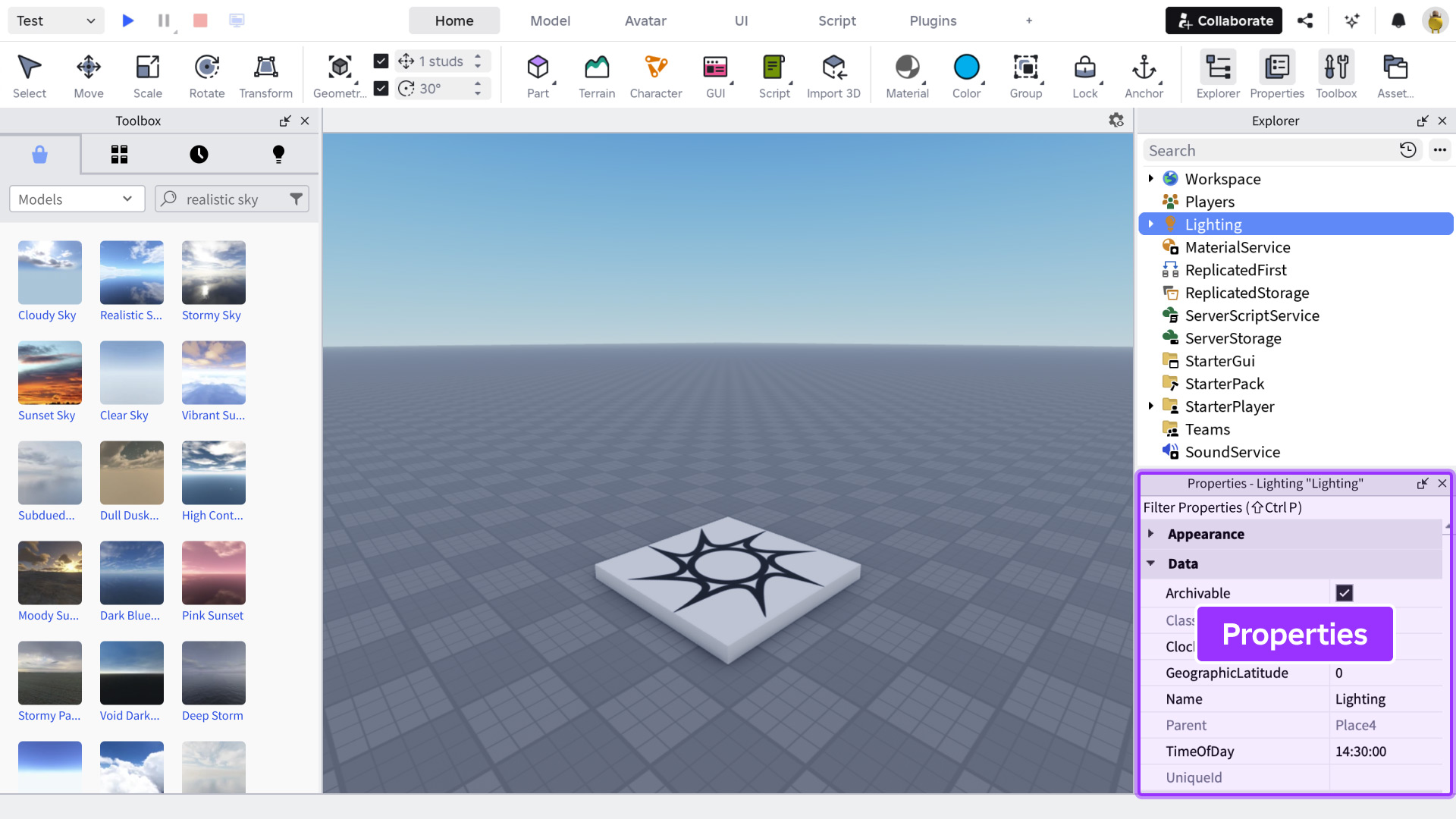
How To Open Properties In Roblox Studio YouTube . How To Open Properties In Roblox Studio Full Guide YouTube . How To Find And Open Properties In Roblox Studio YouTube . How To Open Properties In Roblox Studio Lawod How To Open Properties In Roblox Studio . Properties Window Shown On The Right Side Of Studio S Window Properties


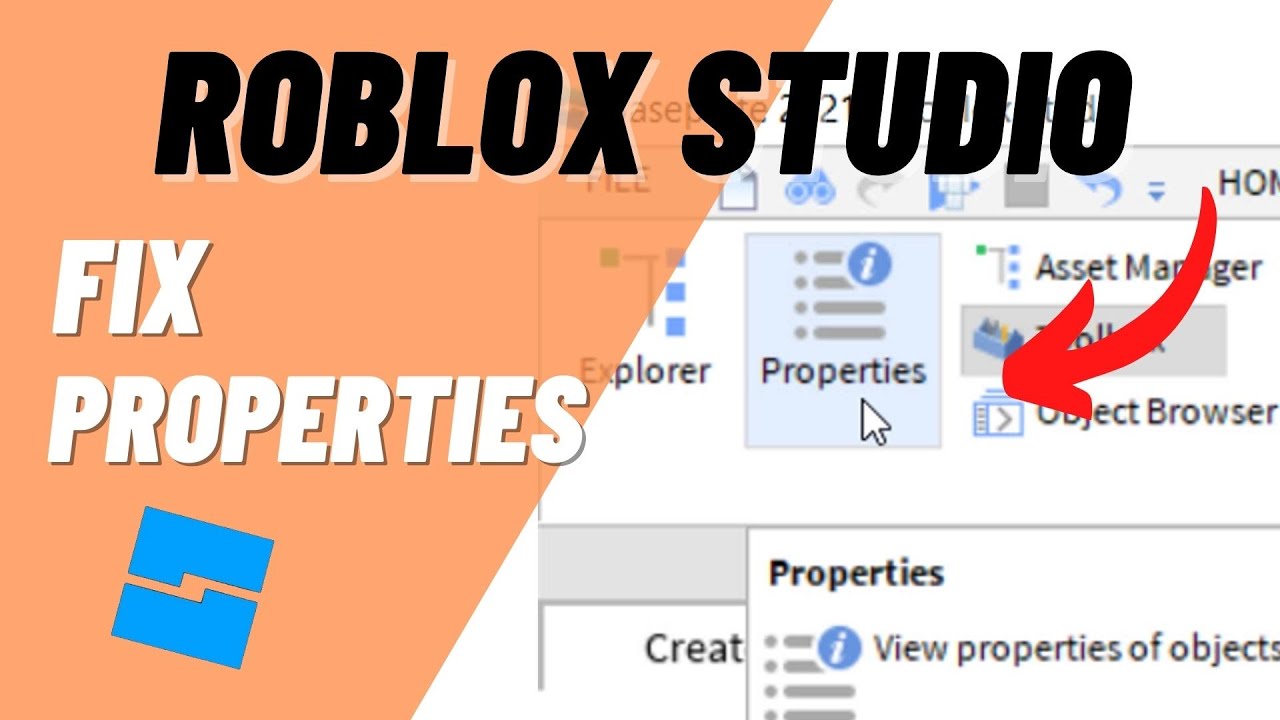
How To Open Properties In Roblox Studio 2025 YouTube . HOW TO OPEN PROPERTIES IN ROBLOX STUDIO YouTube . How To Open Explorer And Properties On Roblox Studio Quick Easy . How To Use The Properties Panel In Roblox Studio YouTube . How To Find Properties Tab In Roblox Studio What To Do When Properties


ROBLOX Studio Properties Tab Is Missing Not Showing How To Open . Roblox Studio Finding The Explorer Window . How To Open Explorer And Properties On Roblox Studio 2025 YouTube . Roblox Studio Finding The Explorer Window . How To Create Surface Properties In Roblox Studio YouTube
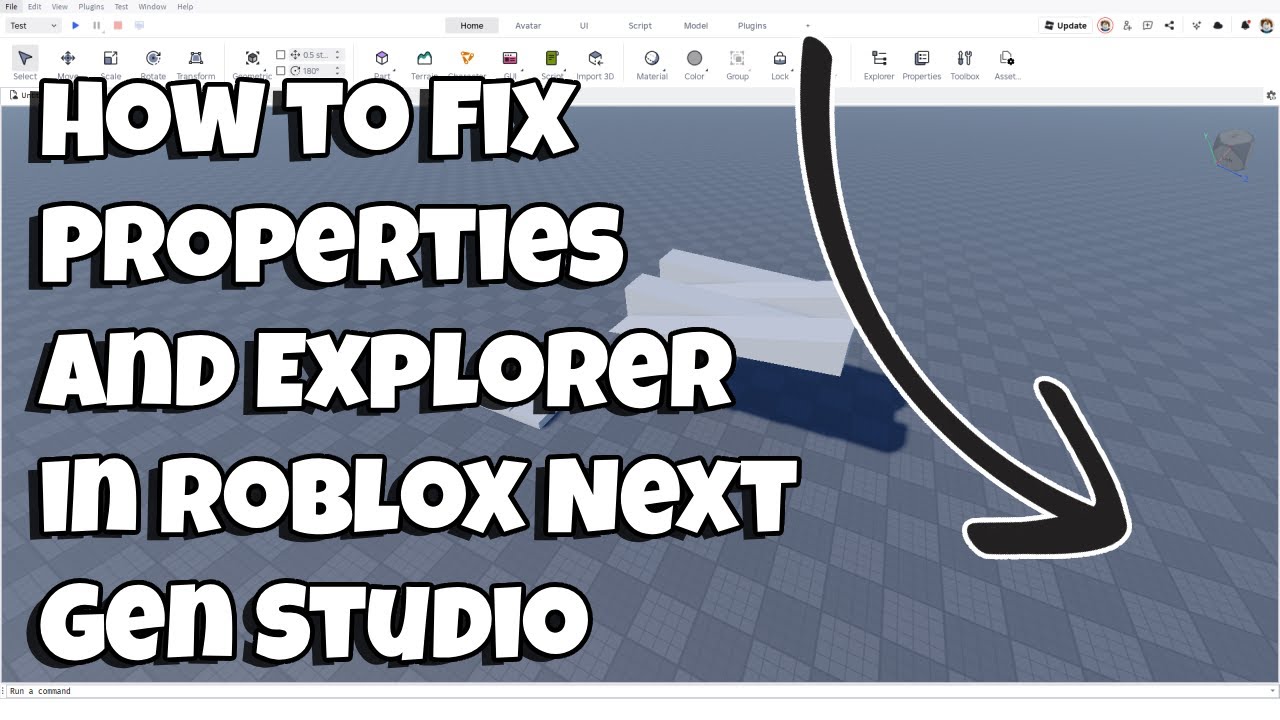


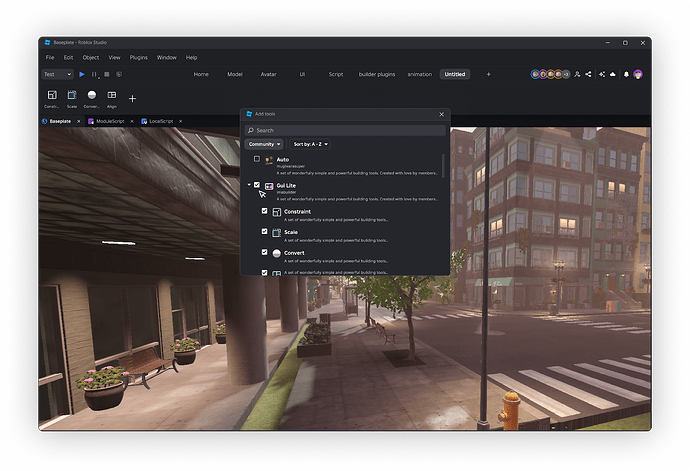
How To Fix Properties And Explorer In Roblox Next Gen Studio YouTube . How To Change A Part S Properties In Script ROBLOX STUDIO TUTORIAL . How To Put Properties Under Explorer In Roblox Studio YouTube . Roblox Studio Finding The Explorer Window . New Upcoming Studio Updates Performance 2 690x471
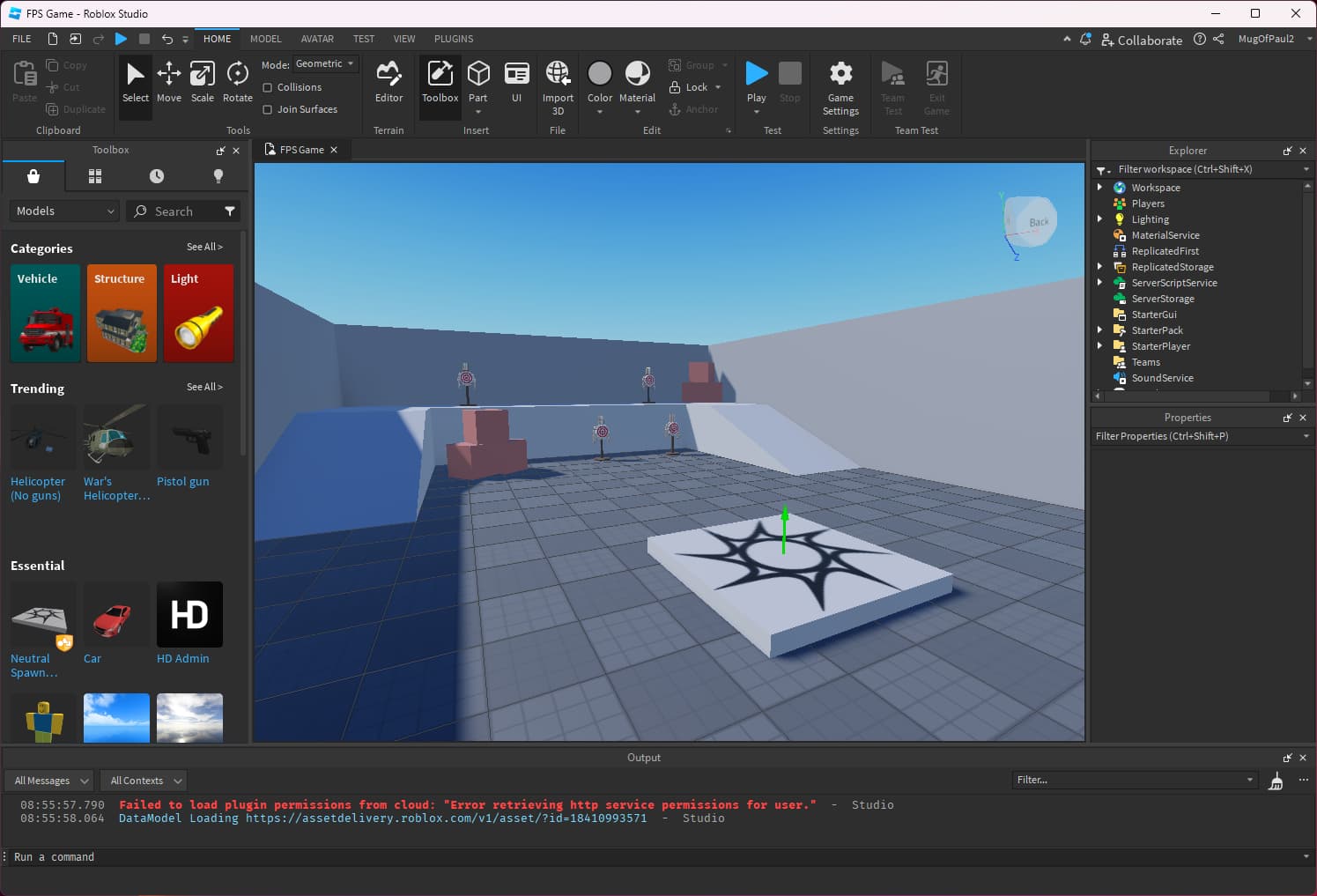
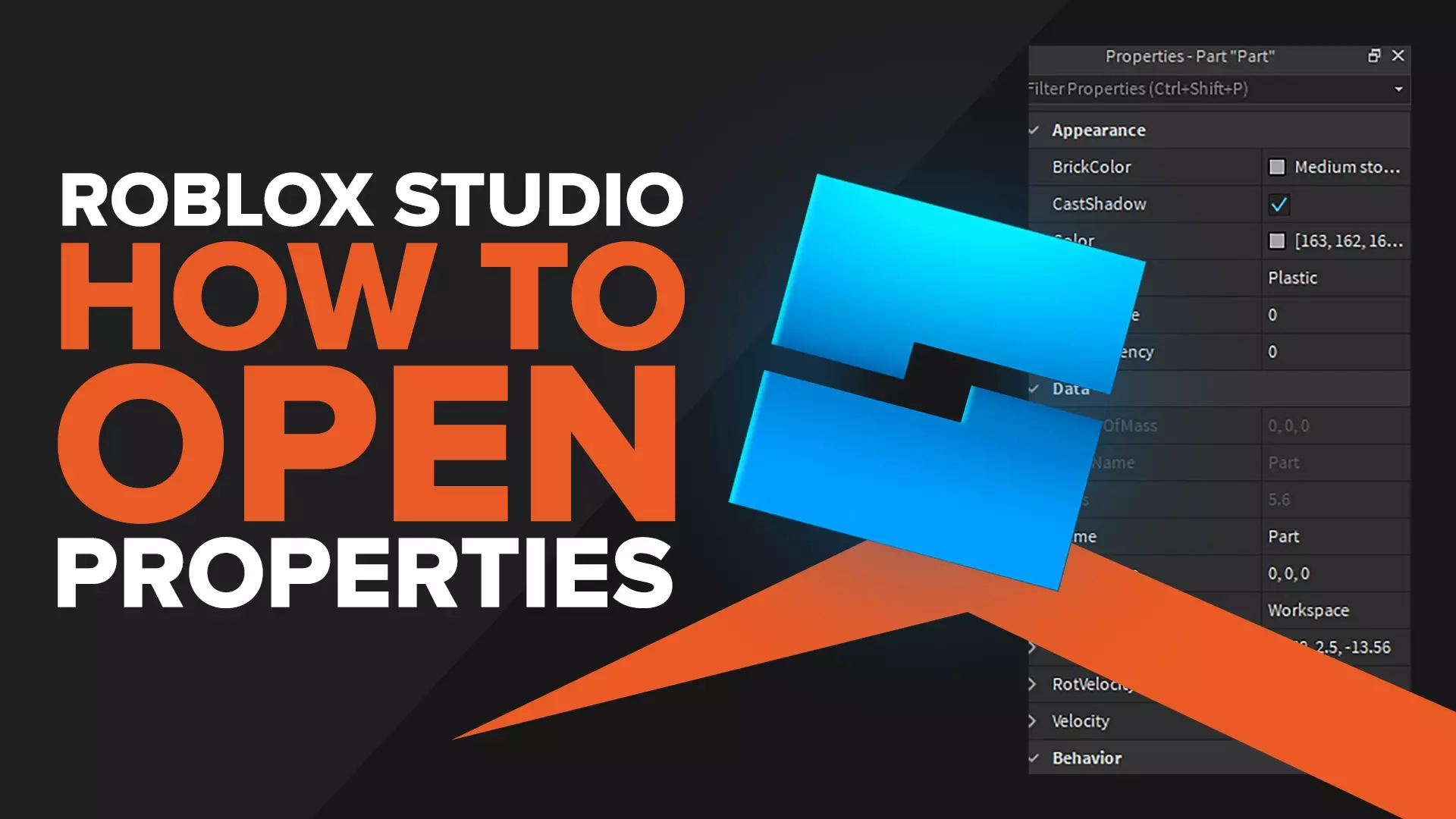

Roblox Studio Step By Step Roblox Studio Download . How You Can Open Properties In Roblox Studio Roblox Studio How To Open. How To Open Properties In Roblox Studio Lawod 2. Access The View Tab 1536x274 . Roblox Studio Nas L Ndirilir Ve Kullan L R Webp. How To Use Roblox Studio Deltia S Gaming Roblox Studio Interface



How To View Or Open Properties On Roblox Studio 2024 Tutorial . Get Roblox Studio Your Easy Guide Img . How Do I Get Roblox Studio Easily Today Roblox Studio How To Play Roblox Studio For Windows . How To Get Output In Vscode Dibujos Cute Para Imprimir . How To Update Roblox On All Platforms 2026 Guide AxeeTech Roblox Studio Update Prompt Creator



Roblox Studio App 2026 The ULTIMATE Beginner Guide To Roblox Studio.webp. Working With The Game Editor Using Roblox Studio InformIT 02fig09 . Help With Studio S Tab Windows Like Explorer And Properties Building . How To Restore Explorer Properties In Roblox Studio 2026 YouTube . Roblox Properties Menu Roblox Studio Open Explorer HXYIMD